Often people ask me about the types of chocolate I use in my desserts and the variations between the different types of chocolate. So here you will find some basic information that will demystify chocolate. Chocolate is generally divided into two distinct categories: (1) Real Chocolate; and, (2) Compound Chocolate. Both real chocolate and compound chocolate are chocolate – the difference is the type of lipid (fat) or oil used in the production.
Real Chocolate
Real chocolate contains cocoa butter, which is extracted from the cacao bean. Cocoa butter is an expensive ingredient which has some unusual characteristics or quirks. Because of the nature of cocoa butter, real chocolate requires going through a special procedure during the melting process called tempering, which re-establishes the cocoa butter crystals, giving the cooled and finished chocolate the proper sheen, snap and taste. Additionally, and of vital importance, tempering prevents bloom, where the cocoa butter separates from the cocoa solids and comes to the surface, turning the chocolate whitish or grayish in color. If you are making candy or dipping items that won’t be consumed within a day or so, tempering is absolutely mandatory for all real chocolate.
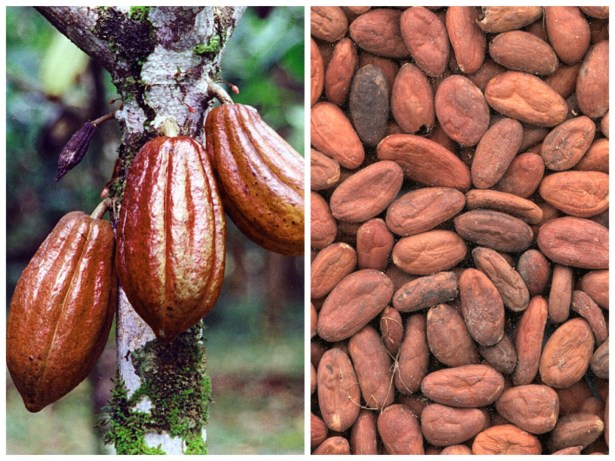
Real chocolate is subdivided into three (3) categories based on the quality of the product (quality of the cocoa beans) and most importantly, the cocoa butter content: regular chocolate, couverture chocolate, and ultra couverture chocolate.
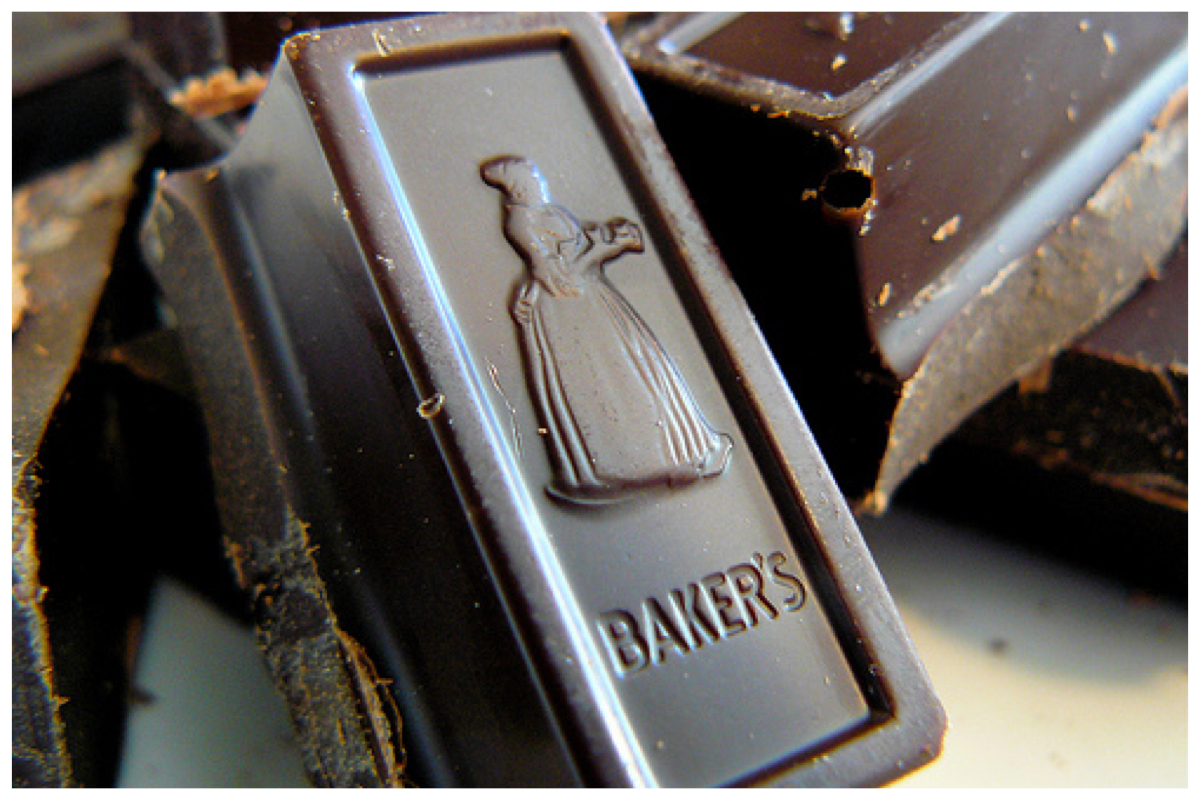
Regular chocolate comes typically in chocolate chip form and it is sweetened with sugar. It is generally made from moderate quality cocoa beans and has very low cocoa butter content and a high viscosity (thickness when in a melted state). Generally used in baking (e.g., chocolate chip cookies, cakes, etc.), regular chocolate holds its shape and is not the best choice when molding, dipping or enrobing. Another form of regular chocolate is unsweetened blocks or bars of baking chocolate (also called plain chocolate), which generally has a relatively low cocoa butter content and doesn’t require tempering when used in normal baking applications. I use this type of chocolate for general baking and it is a decent (i.e., cost-effective) choice for chocolate cakes or cookies. Baker’s Chocolate is a popular brand in this category and is widely available in North American supermarkets.

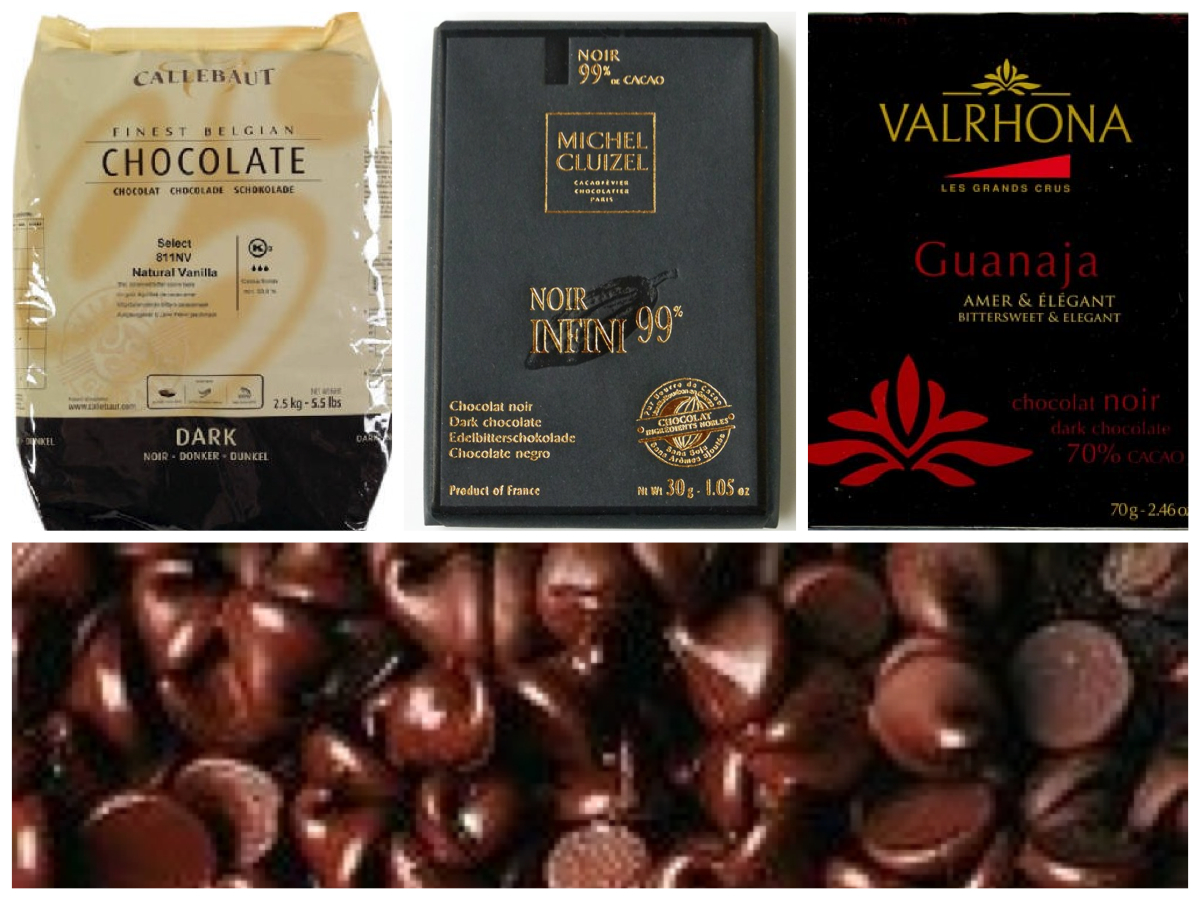
Couverture chocolate: The term couverture translates to “covering” and refers to the finest professional quality chocolate. It is produced with a high percentage of cocoa butter and uses premium cacao beans. A couverture has at least 55% cacao content, that is, either/or coco butter and cocoa solids. To put it another way, couverture contains a maximum of 45% sugar content. It melts smoothly, making it ideal for specialty confectionary-making and molding. When tempered and cooled, it forms an elegant glossy finish. I use either Callebaut or Valrhona. They are equally good products and reasonably priced but I prefer Valrhona. If you have deeper pockets, you can consider Michel Cluizel. I always use couverture chocolate for chocolate mousse, chocolate torte, ganache and covering.
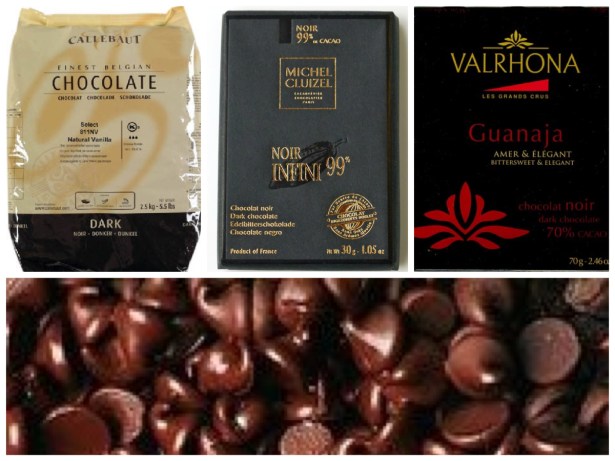
Ultra couverture chocolate is equal in quality to couverture chocolate, but with even higher cocoa butter content. Due to the higher cocoa butter content and very low viscosity, it is the perfect chocolate for dipping and enrobing. Few manufacturers are able to successfully produce this type of chocolate because of the difficulty in balancing the higher cocoa butter content while retaining superb taste and texture. When tempered and cooled, it forms a thin and elegant glossy shell. I seldom use ultra couverture chocolate, but Michel Cluizel makes excellent products in this category. If you love hot chocolate, this recipe made with ultra couverture chocolate will give you an excellent cup of hot chocolate. Unless you are a master chocolatier or a chocolate connoisseur, you can just use couverture chocolate instead of ultra couverture.
Compound Chocolate
Compound chocolate contains vegetable oil instead of cocoa butter and tempering is not required. They are often used in lower-grade candy bars like Butterfinger and Baby Ruth. Generally, they have low cocoa solids percentage and high vegetable fats/tropical fats such as coconut oil and palm kernel oil instead of cocoa butter. However, home hobbyists and professionals alike have utilized compound chocolate due to its ease of use and lower price. Some high quality chocolate manufactures also make compound chocolates. For example, Callebaut’s compounds are ready to use and no tempering needed. They mimic dark, milk and white chocolate, and with their technical specifications, they match even the most specific applications. In textures, they offer a choice ranging from the hard chocolate-like crack to a smooth and soft texture.
About White Chocolate and Milk Chocolate
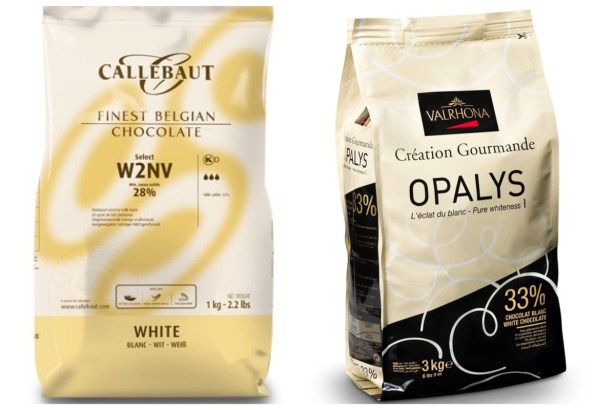
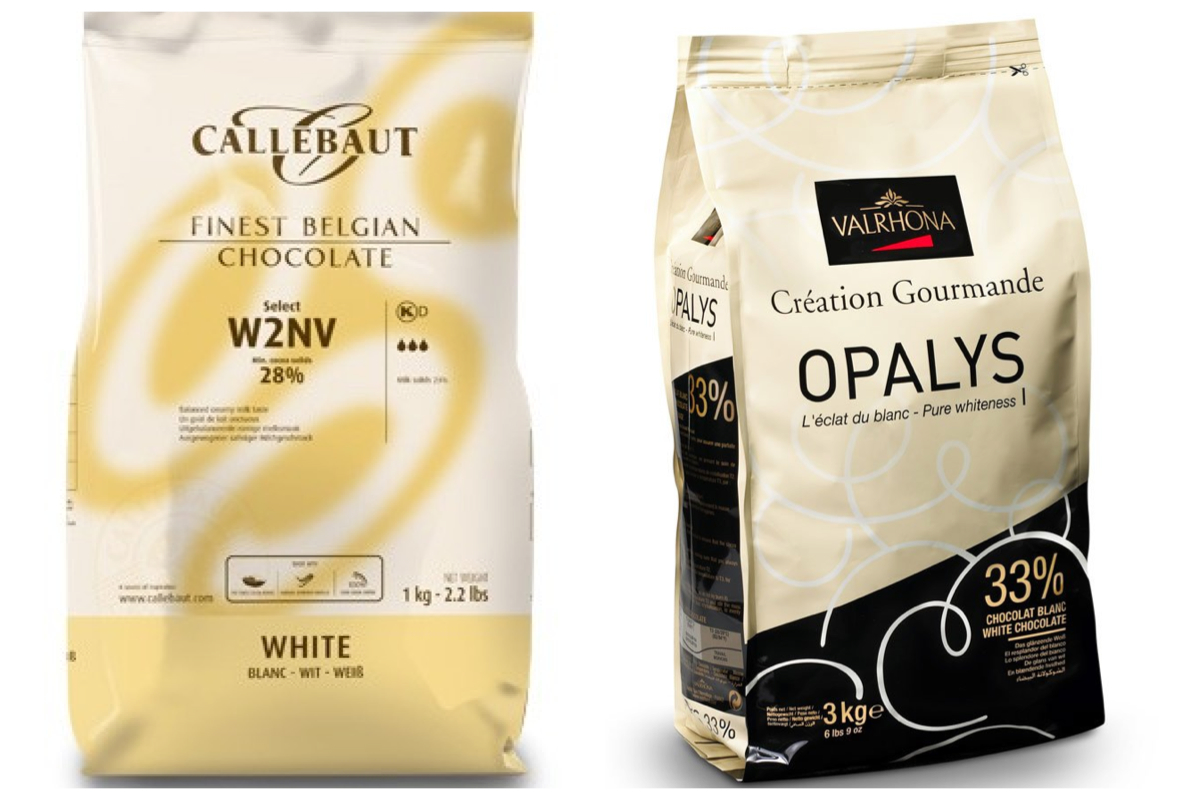
Technically, white chocolate cannot be called “chocolate” because it does not contain chocolate liquor. White chocolate is the combination of cocoa butter, sugar, milk solids, vanilla, and lecithin, and is able to be kept from 6-10 months if stored in a cool, dry place. Generally, white chocolate is ivory-colored, but white chocolate which is made with vegetable fat is white-colored. White chocolate was first made in Switzerland after World War I by Nestlé in 1930 under the name Galak. In the US, white chocolate was first made in New Hampshire by the M&M Candy company. In 1948 Nestlé popularized white chocolate by introducing the Alpine White chocolate bar containing white chocolate and chopped almonds. If you have to use white chocolate, make sure to get a good product. One of the best white chocolates I ever tasted was Davao White Chocolate Bar by Askinosie. It’s unfortunately too expensive for baking. Both Callebaut and Valrhona make excellent white chocolates at reasonable price points. Their ingredients are high-quality so the flavors are pronounced.
Milk chocolate, on the other hand, is the combination of chocolate liquor, cocoa butter, vanilla, milk solids, and lecithin. This type of chocolate could be kept up to a year if stored in a cool, dry place. Milk chocolate must contain at least 10% of cocoa liquor, 3.7% milk fats, and 12% milk solids. The US regulations require a 10% concentration of chocolate liquor while EU regulations specify a minimum of 25% chocolate liquor. The use of cocoa butter substitutes in Canada is not permitted, and chocolate sold in Canada cannot contain vegetable fats or oils. This makes European milk chocolate better than American milk chocolate, because the more chocolate liquor added the more delicious it gets. In baking milk chocolate and other low cocoa solid chocolates are not really appropriate as they have a weak chocolate flavour which dissipates during baking do a finer chocolate is necessary.
How to Select Chocolate
Not all chocolates are created equal, and in general, there is a strong correlation between quality and price. I am not suggesting that you should always buy the most expensive chocolate, but keep in mind that high-quality chocolates with large amounts of cocoa butter and cocoa solids will cost more than their inferior counterparts. The quality of chocolate you use will be the primary determining factor of how the finished chocolate confectionary taste.
Most of the high quality chocolates are made from cacao beans grown in Central America, especially Venezuela where the Criollo variety of cocao beans are grown. Like wine, selecting chocolate is a sensory experience. So here are some pointers to consider when you select chocolate:
- Before you taste the chocolate, look at it closely. You want chocolate that has a glossy surface and is free from blemishes. If the surface is scarred, cloudy, or gray, this may be a sign that the chocolate is old or has been subject to extremes in temperature or handling.
- Next, break the chocolate in pieces. You want a chocolate with a clean, hard “snap” to it. If it bends or crumbles, either the quality is low or the chocolate is old.
- Good chocolate will smell strongly of chocolate. Rub your fingers over the surface to warm the chocolate, and then smell the bar. If it doesn’t smell like chocolate, or if it smells primarily of vanilla or other added ingredients, it probably won’t taste very much like chocolate either. Chocolate easily picks up odours from its environment.
- Finally, taste the chocolate. Pay attention to the way it melts in your mouth. In general, a smooth, velvety feel is preferred. Chewy, dense, waxy, slippery or sandy feel suggest poor quality. Also notice what flavours you can find in the chocolate. Common descriptions of chocolate notes include floral, citrus, berry, coffee, and wine undertones. Notice if the flavour bursts out all at once or if it gradually builds in intensity and lingers after the chocolate has left. Above all, trust your own taste buds. Chocolate preference is very personal, and you know what tastes good to you, so select chocolate that you will enjoy eating.
High Quality Brands
There are many, many different brands of chocolate and chocolate manufacturers to choose from. Names to look for include: Callebaut, Amedei, Bonnat, Michel Cluizel, El Rey, Guittard, Valrhona, and Scharffen Berger. There are numerous other high quality chocolate brands who do not currently sell their products in the US and Canada like Bernachon and Chocolaterie de L’Opera (France), Corné de la Toison d’Or (Belgium), Haigh’s Chocolates (Australia) and Ludwig Weinrich (Germany). Apart from these well known brands, you can also find artisan chocolatiers in your local area. If you are in the Toronto area, try SOMA, LeFeuvre’s Chocolatier, and/or Ambiance Chocolat.
Resources
If you are interested in learning more about chocolate and chocolate confectionary, here are some excellent sources:
- Allchocolate: An excellent website for all sorts of information about chocolate, from the rich history of chocolate to health benefits of chocolate.
- The Great Book of Chocolate by David Lebovitz: Written by a well known pastry chef, this book gives information on how chocolate is made, terminology, buying, storage, notable American and European chocolatiers and some recipes.
- The True History of Chocolate by Sophie Coe and Michael Coe: You get a good understanding of the significance of chocolate in Mayan and Aztec culture, followed by a thorough history of the evolution of chocolate.
- Chocolate Desserts by Pierre Hermé: This is a book written for those who have a little baking experience and are looking to expand their horizons, and most of the recipes here are geared towards intermediate pastry chefs.
- Chocolates and Confections: Formula, Theory, and Technique for the Artisan Confectioner by Peter P. Greweling and the Culinary Institute of America: This is a serious chocolate book for serious chocolate people. This book is heavy on the science of chocolate. The recipes and formulas are extremely precise and assume a fair amount of interest in the chemistry and molecular structures of things. But, if you have the interest, this book will be one of the most fascinating books you can find on the subject of chocolate confectionary.
- The Art of the Chocolatier: From Classic Confections to Sensational Showpieces by Ewald Notter: Written by a renowned confectionery expert, this is an excellent guide to chocolate making and chocolate showpiece design. Tilled a bit towards the professionals, it covers basic information on ingredients, equipment, and common techniques in the pastry kitchen, while also offering clear, step-by-step instructions on creating small candies and large-scale chocolate pieces.
“What you see before you, my friend, is the result of a lifetime of chocolate.”
Katherine Hepburn (1907-2003)
Photo credits: http://www.callebaut.com for Callebaut products and http://www.valrhona.com for Valrhona products.
Copyright© 2012 . All My Nosh . All Rights Reserved



 All My Nosh